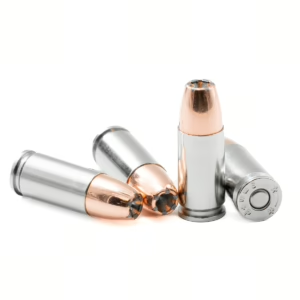
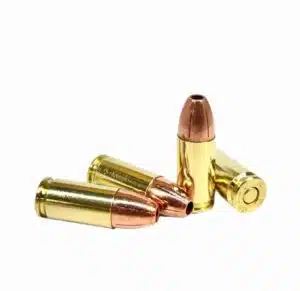
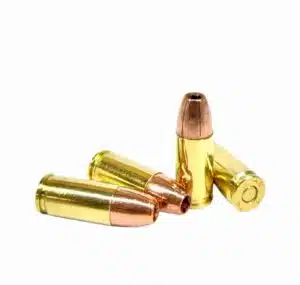
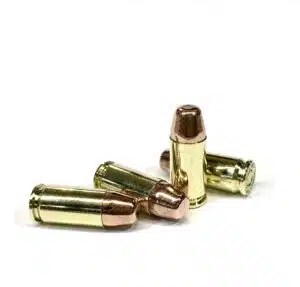
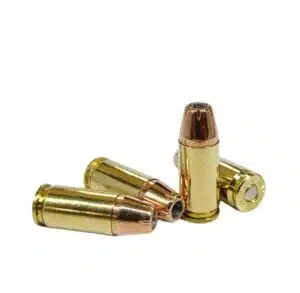
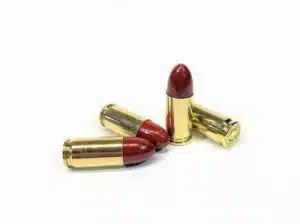
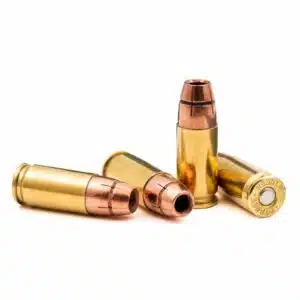
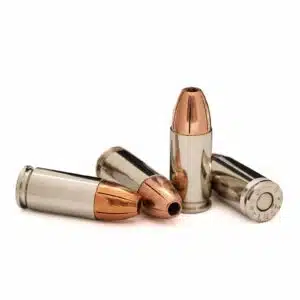
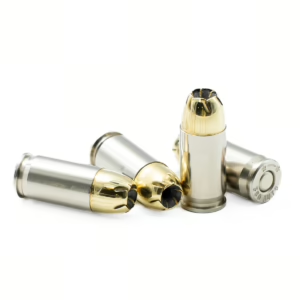
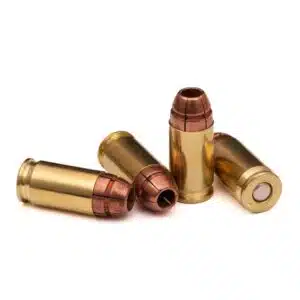
While the size difference may seem minimal, the internal ballistics and powder behavior create noticeable differences in performance.
Ballistics Comparison: Velocity, Energy, and Pressure
The most important distinction in caliber 380 vs 9mm comes down to how each cartridge manages powder burn rate, chamber pressure, and projectile velocity.
9mm Performance Profile
- Higher chamber pressure
- Faster powder burns optimized for velocity
- Greater muzzle energy
- Improved penetration and expansion potential
.380 ACP Performance Profile
- Lower pressure curve
- Reduced velocity
- Softer recoil impulse
- Designed for shorter barrels and compact firearms “
Recoil and Control: What Actually Matters
A common assumption in the 380-caliber vs 9mm debate is that .380 is always easier to shoot. That’s not always the case.
Recoil Reality
- 9mm produces more energy, but often in larger, heavier pistols
- .380 is commonly used in ultra-compact firearms, which can feel sharper or “snappier”
Accuracy and Shoot ability
Accuracy isn’t defined by caliber alone it’s determined by consistency.
9mm advantages:
- Better stability at distance
- Higher velocity supports flatter trajectory
- More forgiving in varied shooting conditions
.380 advantages:
- Manageable recoil in well-designed platforms
- Suitable for close-range defensive use
However, smaller .380 pistols often introduce:
- Shorter sight radius
- Reduced grip surface
- Increased sensitivity to ammunition variation
Ammunition Performance: Where the Real Difference Lies
In both calibers, ammunition quality plays a decisive role.
Precision-engineered ammunition influences:
- Velocity consistency (low standard deviation)
- Reliable feeding and ignition
- Predictable terminal performance
Compact firearms, especially those chambered in .380 ACP are far more sensitive to inconsistencies in:
- Powder charge
- Bullet seating depth
- Overall cartridge length
This is where manufacturers like Steinel Ammunition Co. differentiate themselves.
By controlling:
- Powder selection and burn characteristics
- Tight production tolerances
- Extensive real-world testing
They ensure that each round delivers repeatable performance, regardless of platform.
Concealed Carry Considerations
For concealed carry, both calibers offer distinct advantages.
9mm for Carry
- Higher capacity options
- Stronger terminal performance
- Widely available defensive loads
.380 ACP for Carry
- Smaller, lighter firearms
- Easier concealment
- Reduced recoil in optimized platforms
Reliability and Function
Reliable cycling depends on the relationship between:
- Slide mass
- Recoil spring strength
- Ammunition pressure
9mm platforms generally:
- Cycle more consistently across load types
- Tolerate a wider range of ammunition
.380 platforms:
- Can be more sensitive to underpowered or inconsistent loads
- Require high-quality ammunition for optimal function
Common Misconceptions
“.380 is always easier to shoot”
Not necessarily ultra-light pistols can increase felt recoil.
“9mm is too powerful for beginners”
With proper firearm selection, 9mm is highly manageable.
“All ammo performs the same”
Variations in powder type and manufacturing precision can significantly impact performance.
9mm vs .380 Caliber: Which Should You Choose?
Choose 9mm if you want:
- Maximum performance
- Better penetration and expansion
- Versatility across platforms
Choose .380 ACP if you prioritize:
- Ease of concealment
- Reduced recoil in properly designed firearms
- Simplicity in close-range defensive use
Final Thoughts: Performance Is in the Details
The debate around 9mm vs .380 caliber isn’t about which is universally better it’s about which performs better in your specific application.
What ultimately matters:
- Consistency
- Control
- Reliability
The combination of a well-matched firearm and precision-engineered ammunition determines real-world performance.
FAQ’s
Q1. Is a .380 as powerful as a 9mm?
No, .380 ACP is less powerful than 9mm. 9mm operates at higher pressure and delivers greater velocity, energy, and penetration, making it more effective overall. .380 is designed for compact firearms and prioritizes lower recoil and easier control.
Q2. Why is .380 more expensive than 9mm?
.380 ACP is often more expensive than 9mm because it is produced in lower volumes and requires more precise load development for compact firearms. Higher demand for concealed carry ammo and tighter quality control also increase cost.
Q3. What is the velocity of a .380 compared to a 9mm?
- .380 ACP: ~900–1,050 fps
- 9mm: ~1,100–1,300+ fps
9mm offers higher velocity and energy, while .380 is optimized for shorter barrels and close-range use.