
5.56 NATO Ammo
Showing all 5 resultsSorted by latest
The 5.56 NATO ammo stands as one of the world’s most widely adopted military and civilian rifle cartridges, serving armed forces, law enforcement, and responsible shooters across diverse applications. Steinel Ammunition Co. manufactures precision-engineered 5.56×45 NATO ammunition that delivers consistent ballistics, reliable function, and safe performance in AR-15 platforms and military-pattern rifles. Our 5.56 NATO rounds meet rigorous quality standards while providing shooters with the accuracy and dependability required for training, competition, and defensive applications.
Our 5.56 NATO Ammo
Discover Steinel’s full lineup of 5.56×45 NATO ammunition, engineered for reliable, consistent performance across a wide range of shooting applications and firearm platforms.
-
Sale!
In Stock
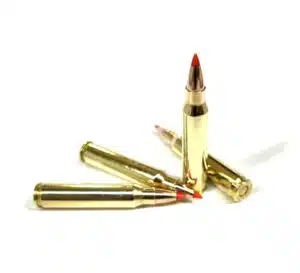
5.56×45 NATO 40gr. Ballistic Tip
Original price was: $29.15.$23.32Current price is: $23.32.Save : $5.83Qty: -
Sale!
In Stock
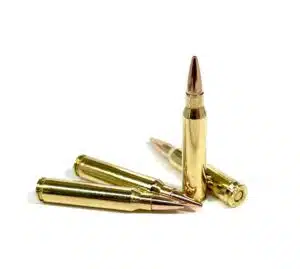
5.56×45 NATO 75gr. BTHP MATCH MONARCH 2,560 FPS (16 in.)
Original price was: $26.81.$20.46Current price is: $20.46.Save : $6.35Qty: -
Sale!
In Stock
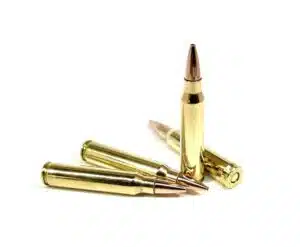
5.56×45 NATO 75gr. BTHP 2,700 FPS (16 in.)
Original price was: $25.83.$19.62Current price is: $19.62.Save : $6.21Qty: -
Sale!
In Stock
5.56×45 NATO 68gr. Open Tip Match (OTM)
Original price was: $24.53.$19.62Current price is: $19.62.Save : $4.91Qty: -
Sale!
In Stock
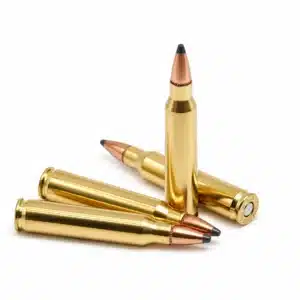
5.56×45 NATO 55gr. Soft Point
Original price was: $26.61.$21.29Current price is: $21.29.Save : $5.32Qty:
Why Choose 5.56 NATO Ammo?
Adopted by NATO in 1963, 5.56 NATO ammo has served military forces for decades, earning global acceptance for its reliability, efficiency, and versatility across military service and modern sporting rifles.
- Standardized Specifications: NATO standardization (STANAG 4172) ensures consistent ammunition performance across manufacturers and platforms, providing shooters with predictable ballistics and reliable function.
- Wide Platform Compatibility: The 5.56 NATO cartridge chambers safely in AR-15 rifles marked for 5.56 NATO, as well as M16, M4, and other semi-automatic or select-fire platforms designed to NATO specifications.
- Universal Availability: As one of the most widely produced rifle cartridges globally, 5.56 NATO ammo for sale is readily available from dealers, online retailers, and shooting ranges, ensuring a consistent supply for training and practice.
- Economical Training: High-volume production and the availability of military surplus make 5.56 NATO training ammo among the most cost-effective centerfire rifle options for developing marksmanship skills.
- Diverse Load Selection: Manufacturers produce 5.56 NATO rounds in numerous configurations, including full-metal-jacket, soft-point, hollow-point, and specialty loads, supporting a wide range of shooting disciplines.
- Flat Trajectory: The 5.56 NATO’s high-velocity, efficient bullet designs produce relatively flat trajectories, simplifying holdover and enabling effective precision shooting at intermediate ranges.
5.56 NATO – Ballistics, Velocity & Performance Overview
Understanding the ballistic characteristics of 5.56 NATO ammunition ensures optimal performance across various shooting applications and platforms.
- Velocity & Energy Performance: Factory 5.56×45 NATO ammunition typically delivers muzzle velocities between 2,700 and 3,300 feet per second, depending on bullet weight and barrel length. Standard 55-grain M193 5.56 NATO rounds achieve approximately 3200 to 3,250 fps from a 20-inch barrel. Muzzle energy generally ranges from 1,200 to 1,400 ft-lbs, with lighter bullets offering higher velocity and heavier bullets providing improved downrange energy retention. Barrel length plays a major role, as 16-inch barrels common on civilian AR-15 platforms usually reduce velocity by 100–200 fps compared to military-length barrels.
- Pressure Standards & Chamber Design: The 5.56 NATO cartridge operates at a higher maximum average pressure of approximately 62,366 psi, measured using piezoelectric methods. To safely handle this pressure, 5.56 NATO chambers feature a longer leade and modified throat angle compared to .223 Remington chambers, allowing safe use of military-spec loads.
- Effective Range & Trajectory: The maximum effective range of 5.56 NATO ammo extends to 500–600 yards from a 20-inch barrel for trained shooters, with practical point-target engagement typically within 300–400 yards. For shorter carbine barrels (14.5-inch M4), the effective range is closer to 500-550 yards.
- Bullet & Case Specifications: The 5.56 NATO features a bullet diameter of .224 inches (5.7mm), identical to that of the 223 Remington. Standard weights include 55 grains (M193 ball), 62 grains (M855/SS109 steel-core penetrator), 69-77 grains (match-grade and long-range bullets), and specialty weights from 40-90 grains for specific applications. Case length measures 1.760 inches (44.70mm) with overall cartridge length specifications that accommodate various bullet profiles and ogive designs.
5.56 NATO vs .223 Remington – What’s the Difference?
Understanding the differences between 5.56 NATO and .223 Remington is essential for safety and performance, as they share dimensions but are not fully interchangeable.
- Chamber Design Differences: The 5.56 NATO chamber uses a longer leade (freebore), about 0.125 inches longer than .223 Remington, allowing the bullet to travel farther before engaging the rifling, which helps reduce pressure with military-length bullets. It also features a steeper 3.6-degree throat angle compared to the .223 Remington’s 2.0-degree angle, which influences pressure behavior during bullet engagement.
- Dimensional Tolerances: Military 5.56 NATO chambers are cut with slightly looser tolerances to ensure reliable feeding and extraction under adverse conditions. In contrast, .223 Remington chambers use tighter tolerances, prioritizing accuracy over extreme reliability.
- Pressure Specifications: 5.56 NATO ammunition is loaded to higher maximum pressures, approximately 62,000 psi measured by piezoelectric methods, compared to the SAAMI limit of 55,000 psi for .223 Remington. This difference equates to roughly 10–13% higher peak pressure.
- Testing and Proofing: NATO chambers are proof-tested to higher pressures than sporting .223 Remington chambers, providing greater safety margins when firing military ammunition. Differences in pressure measurement methods (historical copper crusher versus modern piezoelectric testing) also contribute to reported pressure variations.
- Safety and Interchangeability: Firearms chambered in 5.56×45 NATO can safely fire both 5.56 NATO and .223 Remington ammunition. Rifles chambered only for .223 Remington should not fire 5.56 NATO, as the shorter leade and tighter chamber may cause dangerous overpressure.
How to Choose the Right 5.56 NATO Load
Selecting the right 5.56 NATO ammunition requires matching bullet design and weight to your firearm and purpose.
- Application-Based Selection: Choose economical 55–62gr FMJ/TMJ loads for training, 69–77gr match-grade BTHP/OTM rounds for competition, controlled-expansion bullets (55–77gr) for defensive use, and premium expanding 62–70gr bullets for ethical hunting wherever legal.
- Bullet Weight Considerations: Light bullets (40–55gr) deliver high velocity and flat trajectories for varmint and training use, mid-weight bullets (62–69gr) offer balanced velocity and penetration for general-purpose shooting, while heavy bullets (75–77gr) provide superior long-range accuracy and wind resistance when used with faster twist barrels (1:7 or 1:8).
- Barrel Twist Rate Matching: Match bullet weight to barrel twist rate. For instance, 1:12 stabilizes up to ~55gr bullets, 1:9 supports 55–69gr loads, and faster 1:8 or 1:7 twists are required for heavier 69–77gr match bullets to ensure proper stabilization and accuracy.
- Case Material Selection: Brass-case ammo offers the best reloadability, consistency, and extraction for precision and match use, steel-case ammo provides a cost-effective training option with reduced reloadability and accuracy, while aluminum-case ammo is lightweight and moderately priced but non-reloadable and restricted at some ranges.
- Quality & Manufacturing Standards: NATO-spec and premium commercial 5.56 NATO ammunition follow strict quality controls for reliability, with bulk loads optimized for cost-effective training and match-grade options built to tighter tolerances for superior accuracy.
Applications of 5.56 NATO Ammo
The 5.56 NATO cartridge’s versatility and widespread adoption have made it a staple across numerous shooting disciplines, tactical applications, and sporting pursuits.
- Tactical & Defensive Use: Law enforcement and trained civilians rely on 5.56 NATO for defensive use, benefiting from AR-15 compatibility, reliable terminal performance, and modern barrier-blind or controlled-expansion bullet designs.
- Competitive Shooting Sports: 5.56 NATO is widely used in Service Rifle, High Power, and 3-Gun competitions, with match-grade 69–77gr bullets providing the accuracy and consistency required for competitive shooting.
- Training & Skill Development: Moderate recoil, affordable ammunition, and wide availability make 5.56 NATO ideal for high-volume training, marksmanship development, and maintaining shooting proficiency.
- Varmint & Predator Control: Flat trajectories and fast-expanding bullets make 5.56 NATO effective for varmints to 300 yards, while heavier expanding bullets perform well on coyotes and similar predators.
- Recreational Shooting: Informal plinking, steel target engagement, and casual range sessions benefit from the 5.56 NATO’s enjoyable shooting characteristics, minimal recoil, and affordable ammunition options that encourage extended shooting sessions.
Frequently Asked Questions (FAQs)
1. Can I shoot 5.56 NATO ammo in a .223 Wylde chamber?
A. Yes, .223 Wylde chambers are specifically designed to safely fire both 5.56 NATO and .223 Remington ammunition while maintaining enhanced accuracy potential.
2. What is the best grain weight for 5.56 NATO ammo?
A. The best grain weight depends on your application: 55 grains for training and general use, 62 grains for versatile all-purpose applications, and 69-77 grains for long-range precision and competition.
3. What is M193 vs. M855 5.56 NATO ammo?
A. M193 is a 55-grain full-metal-jacket ball round optimized for 20-inch barrels, while M855 is a 62-grain steel-core penetrator (green tip) with enhanced barrier penetration.
4. What is the effective range of 5.56 NATO ammo?
A. The effective range is approximately 500-600 yards for trained shooters with appropriate platforms, with point-target accuracy remaining viable to 300-400 yards under field conditions.
5. Is the steel-case or brass-case 5.56 better?
A. Brass-case ammunition offers superior accuracy, reloadability, and extraction reliability, while steel-case ammunition provides economical training options; brass is recommended for precision and defensive applications.
6. Is 5.56 NATO good for hunting?
A. The 5.56 NATO is effective for varmints and predators, and can ethically harvest deer and hogs within 150-200 yards using premium expanding bullets where legally permitted; always verify local caliber regulations.