
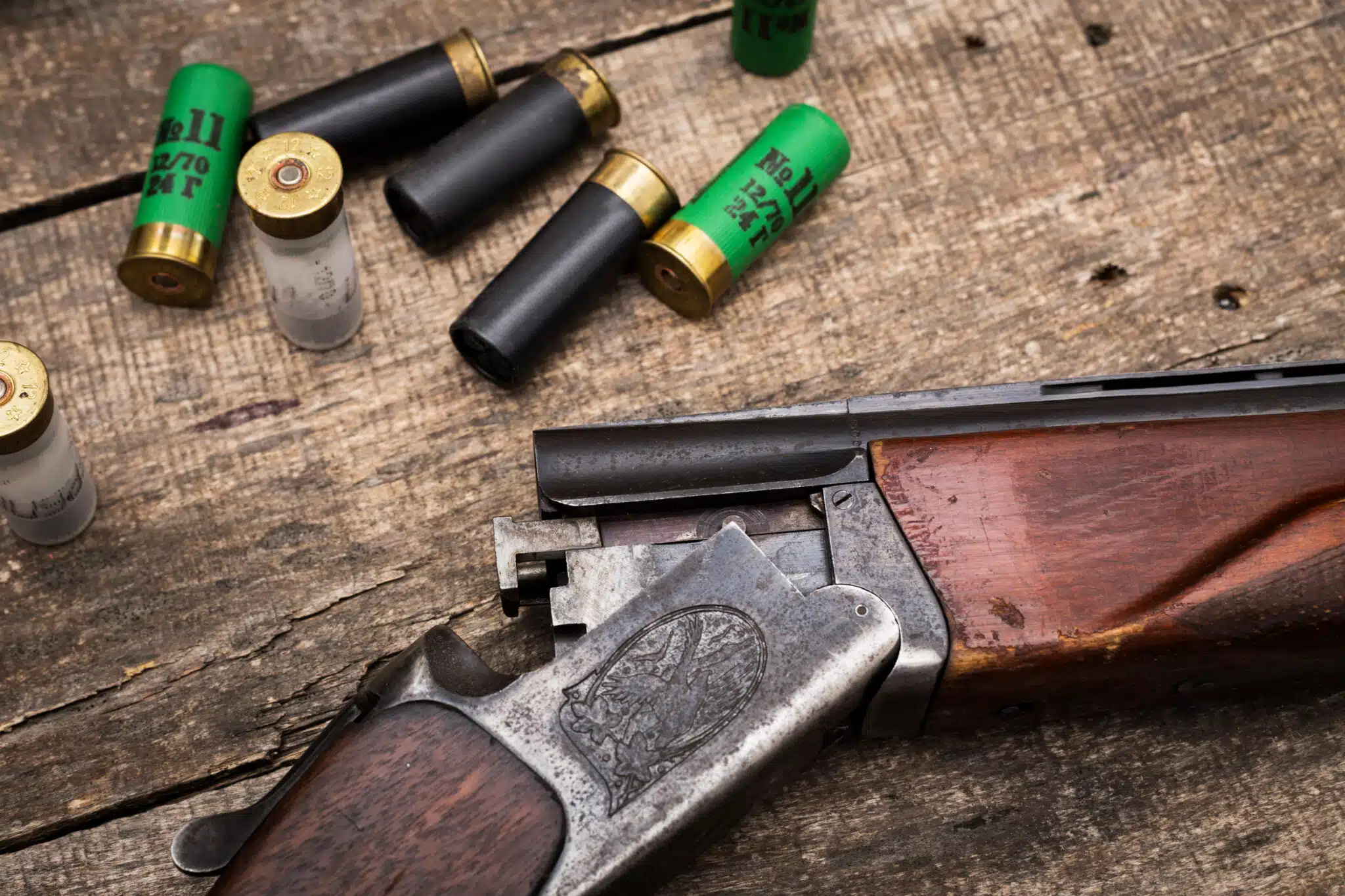
Shotgun ammunition is one of the most misunderstood areas in shooting. Walk into any well-stocked shop and you’ll find slugs, buckshot, and birdshot sitting side by side, yet each serves a very different purpose.
The question most shooters eventually ask is straightforward: slug vs buckshot, which one should you actually be running?
The answer depends entirely on your application. Below is a clear, practical breakdown of buckshot vs slug, with a quick look at birdshot vs buckshot vs slug so you can make the right call with confidence.
What Is a Shotgun Slug?
Standard 12-gauge Foster slugs typically weigh around 1 ounce (437 grains) and travel in the range of 1,200-1,600 fps, depending on the load and barrel.
- Foster slugs are designed for smoothbore barrels and stabilize through shape and weight distribution.
- Sabot slugs use a plastic sleeve that separates after exiting the barrel, allowing for improved accuracy when fired through rifled barrels.
- Solid copper hollow-point slugs represent the modern evolution, engineered for controlled expansion and consistent terminal performance.
-
In Stock
12 Gauge High Velocity Slug- 2 3/4″ 1oz.
$28.83Qty: -
In Stock
12 Gauge Light Recoil Slug- 2 3/4″ 1oz.
$29.09Qty:
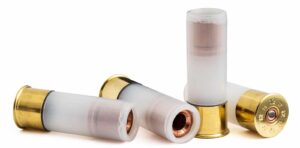
At Steinel Ammo, our slug offerings include:
- A light-recoil 12-gauge solid copper hollow point, designed with law enforcement input and capable of expanding up to ~1.5 inches
- A full-power 1 oz load at 1,380 fps for extended reach and maximum energy delivery
- A 20-gauge solid copper hollow point, offering reduced recoil without sacrificing effectiveness
-
In Stock
20 Gauge High Velocity Slug- 2 3/4″ Solid Copper Hollow Point
$29.06Qty:
Key Characteristics
- Excellent accuracy at moderate distances
- Greater effective range than shot loads
- Deep penetration with concentrated energy transfer
Best Use Cases
Slugs are ideal when precision and penetration matter, large game hunting, longer-range shots, or jurisdictions that require slug-only hunting
What Is Buckshot?
Buckshot is a load containing multiple large pellets. Instead of one projectile, the load produces a pattern of pellets that spreads with distance.
How Buckshot Works
A standard 2¾” 12-gauge 00 buckshot load typically contains 8 or 9 pellets, each approximately .33 caliber.
The pattern remains tight at close range but expands as distance increases. Spread is influenced by:
- Choke selection
- Barrel length
- Load quality and consistency
Steinel Ammo buckshot is built with precise pellet uniformity and strict quality control, ensuring dependable, repeatable patterns, because consistency matters when the stakes are high.
Key Characteristics
Wider spread at close range
Increased hit probability in dynamic situations
Optimized for short-distance effectiveness
Common Use Cases
Buckshot excels in:
- Close-range hunting of medium to large game
- Defensive applications where rapid target acquisition and coverage are critical
Slug vs Buckshot: Key Differences
| Factor | Slug | Buckshot |
| Projectile Type | Single solid projectile | Multiple pellets (typically 8–9) |
| Effective Range | 75–125+ yards | 25–50 yards |
| Accuracy | High, single point of aim | Moderate, pattern-dependent |
| Spread | None | Wide (choke-dependent) |
| Best Use | Precision and penetration | Close-range coverage |
At its core, the choice comes down to precision vs spread.
- Slugs reward careful aim with reach and penetration
- Buckshot offers forgiveness at close range through pattern spread
Slug vs Buckshot: Terminal Performance
The real difference lies in how energy is delivered to the target:
- Slugs concentrate all energy into one projectile, producing a single, deep wound channel
- Buckshot distributes energy across multiple pellets, creating several simultaneous wound channels at close range
Neither is universally superior, it’s about choosing the right tool for the job.
Birdshot vs Buckshot vs Slug: What’s the Difference?
Birdshot uses dozens or hundreds of tiny pellets designed for small targets such as birds or clays. It lacks the mass and penetration required for larger game or defensive applications.
Comparison Breakdown
- Pellet Size: Birdshot is smallest, buckshot is medium-to-large, slugs are one solid projectile.
- Range: Birdshot is very short range, buckshot is effective at close to moderate range, slugs reach farther.
- Application: Birdshot for birds and clays, buckshot for close-range defense or medium game, slugs for large game or precision needs.
Real-World Applications: When to Use Each
Use a slug when you need accuracy and deep penetration – for large game hunting, longer shots, or in slug-only states. Use buckshot when you need wider coverage – close-range hunting, home defense, or situations where the target is moving. Use birdshot when you’re hunting upland birds, waterfowl, or shooting clays – not suitable for defensive use or large game.
Which One Should You Choose?
Three practical factors determine the right choice:
- Distance – Slugs for longer shots; buckshot for closer ranges.
- Target Size – Larger game usually favors slugs; medium game or defensive use often favors buckshot.
- Need for Precision vs Spread – Choose a slug when you must hit a specific vital zone; choose buckshot when you want a wider margin for error.
Conclusion
Slug vs buckshot is not a question with a universal answer. It’s a selection decision based on range, target, and scenario. Slugs give you concentrated power and accuracy at distance. Buckshot gives you close-range coverage with multiple simultaneous impacts. Birdshot is for small targets and clays.
Understand your application, match the load to the situation, and choose ammunition built to consistent specifications that performs the same way every time.
At Steinel Ammo, we load both slugs and buckshot with the same focus on consistency and performance that defines every round we make.
Still not sure which load is right for your shotgun and your needs? Call us at (330) 840-7086. We’ll help you select the right load for your application.
Because your legacy deserves better than a guess.